


Бар, Шаргород, Снітків, Копайгород, Лучинець, Ялтушків
602 pp.
of 602 scans
AI assistant for genealogists
Archives closer. Family dearer.
With Nyshporka, an AI assistant searches the archives for your ancestors on your behalf: it finds the files you need, reads old handwriting and shows the surname right on the scan. And you are the one who decides.
 Ask Nyshporkaabout your village or surname

22 people have already shared what they read: 10,069 books, 2,857,523 pages +3,775 this week
To Supriaha →Genealogical research stalls for all sorts of reasons — and often never even starts.

You want to research your family, but it's unclear which archives, which books and where to get them. Nyshporka will guide you from the very first question.
An ancestor suddenly appears in a village, and where they came from is unclear.
The answer may lie not in a parish register but in a confession list, a revision list or a court book from a completely different fond.
Hundreds of books and thousands of pages of old handwriting — you couldn't look through them by hand in years.
Sometimes a single page found is enough to take the search back by decades.

Later odnodvortsy hinted at the family's noble status, but there was neither a family file nor a line in the alphabetical indexes. Nyshporka read around 120 files of the Podolia Noble Assembly and, on page 1192 of one of them, found an act of 1802: the assembly resolved to enter the family in the nobility register.
Read the story →
A person restoring a manor house in Yaropovychi came to research the history of their village. Nyshporka read all 146 Kyiv court books for 1750–1796 — 111 824 pages without an index — and brought 676 mentions together in one report: owners, the church, people by name, estate inventories, a timeline.
Read the story →Getting from a question like this to a discovery like that — that is its job.

It knows which archive and fond hold your village's books: the ЦДІАК index of 4566 settlements, the ДАХмО catalogue of 9020 files, parishes and neighbouring villages.
The ARCHIUM and “Babyn Yar” archive viewers, the FamilySearch film mirror, Wikimedia Commons, Internet Archive, “Chtyvo”, ridni.org — and books in Supriaha that have already been read.
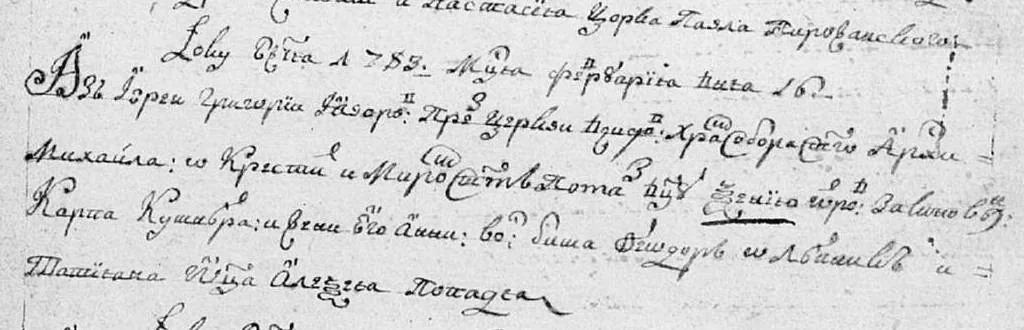
Cyrillic and Polish Latin script of the 18th–19th centuries — and it finds the surname even when it was written differently or with a mistake.
Example: a record no index knew about →
When the record is silent, it suggests where the family might have come from and where to check — and says honestly what is proven and what isn't yet.

What was found, on which page of which book, how much was looked through and where to dig next. Records broken down into an Excel table.

Every finding goes onto a person card and a family card with a link to the source page, and from these cards Nyshporka builds the family tree — together with a map of places and a family website.
Example: the family of Karpo Kushnir →Not just family trees: the same way people research the history of a village and parish, a church, local culture and the lives of notable people.
You don't have to manage all these steps by hand. Nyshporka works on your computer together with an AI assistant — Claude or Codex: you say in plain words who you are looking for, and it searches.

For example: “find everyone named Kovalskyi in the Chechelnyk parish registers for 1820–1850”.
It suggests which archive and fond to search, and takes books already read from Supriaha as well as your own scans.
Cyrillic and Polish Latin script — and it looks for the surname even where it was written differently or with a mistake.
Every match leads to a specific page of a book. Whether it is your family is for you to decide.
You can also run it from your phone: the assistant session on your computer is controlled remotely from the Claude or Codex app. The computer has to stay on.
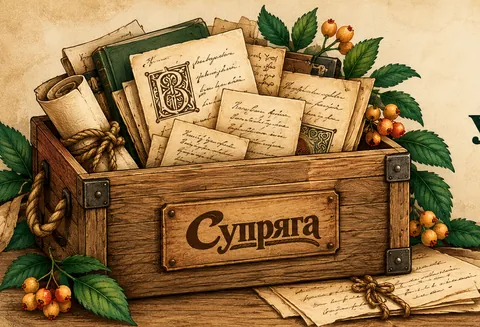
And perhaps the book you need won't even have to be read again. Supriaha is a shared bank of books that have already been read: a book is read once, and everyone searches it.
Browse the books already read →
And if the book you need isn't in Supriaha yet, you work with your own scans.
Nyshporka works on your computer, and the scans stay on it — they don't go to our server. The AI assistant sees only what it opens during the search, as in an ordinary conversation with Claude or ChatGPT. Only the read text goes to Supriaha — and only when you yourself decide to share it.
Install Nyshporka and connect Claude or Codex — step by step, with no commands. Nyshporka itself is free.
No time to search yourself? We will read your books and search for your family for you.

Archives closer. Family dearer.